Happy vulture day!
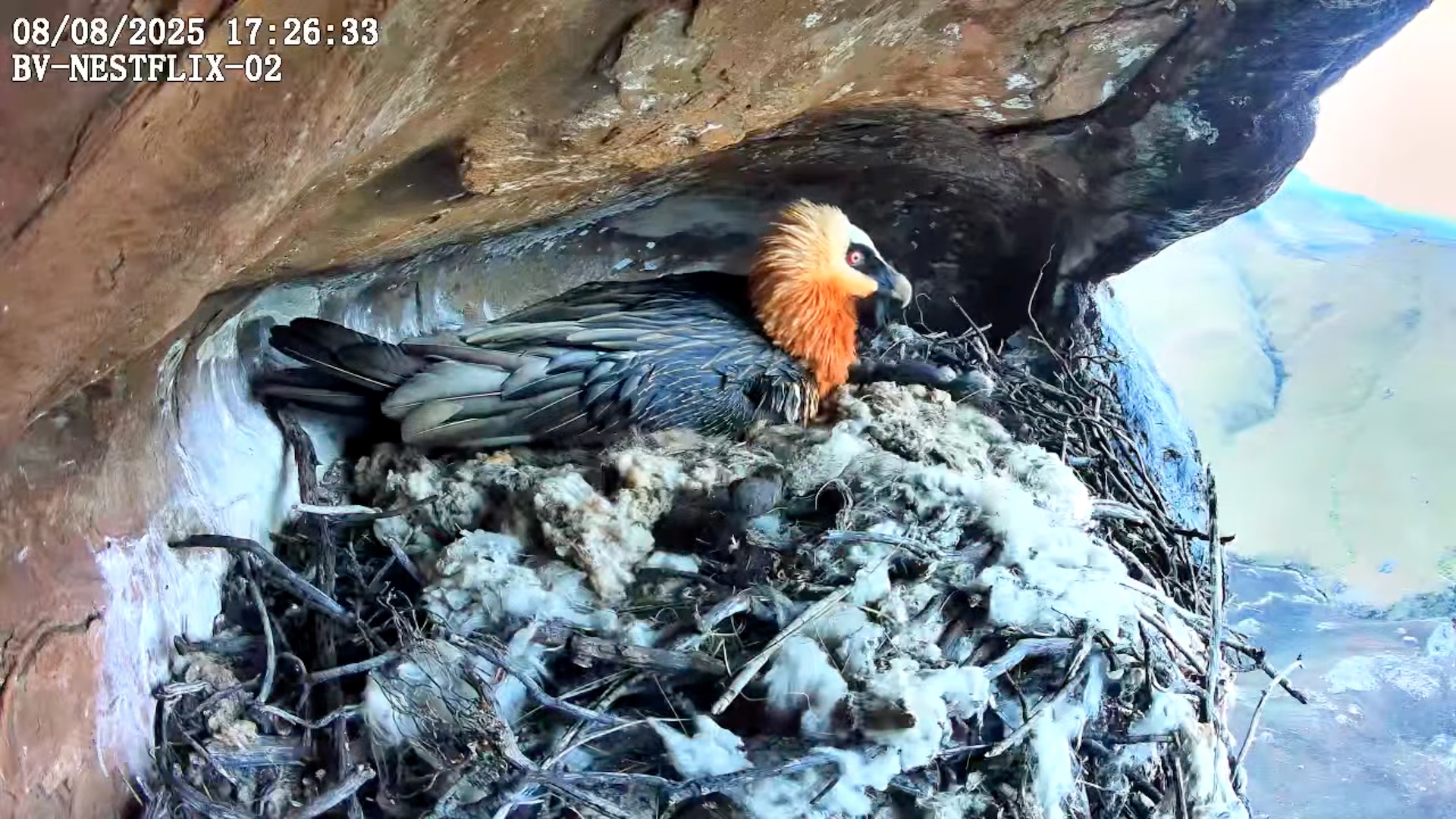
Since it's international vulture awareness day today (5 September), I thought I'd share a few things I've learned about why vultures are cool, and some of my favourite vulture live streams.
Vultures are cool
Vultures eat carrion, which might seem bad or gross, but it's actually great. For one thing, since vultures eat primarily carrion, they generally don't kill animals to eat them, like other raptors do. You could say they're pacifist raptors.
It's also really useful to have vultures around to eat carrion. Because they eat animals that are dead and decaying, they help to clean up carcasses that could otherwise rot and spread diseases and bacteria. Vultures tend to have extremely strong stomach acid to kill off germs and bugs in their food.
My favourite vulture, the bearded vulture, is extra special, because they're the only bird that specialises in mainly eating bones. They have extremely corrosive stomach acid that helps them break down the bones, so they can get nutrients out of the marrow inside.
This short documentary is a good introduction to the problems facing bearded vulture populations in the wild, and the efforts of conservation groups to try to reintroduce them and boost their numbers in various areas where they used to thrive.
Vulture nest live streams
Egyptian vultures in Bulgaria
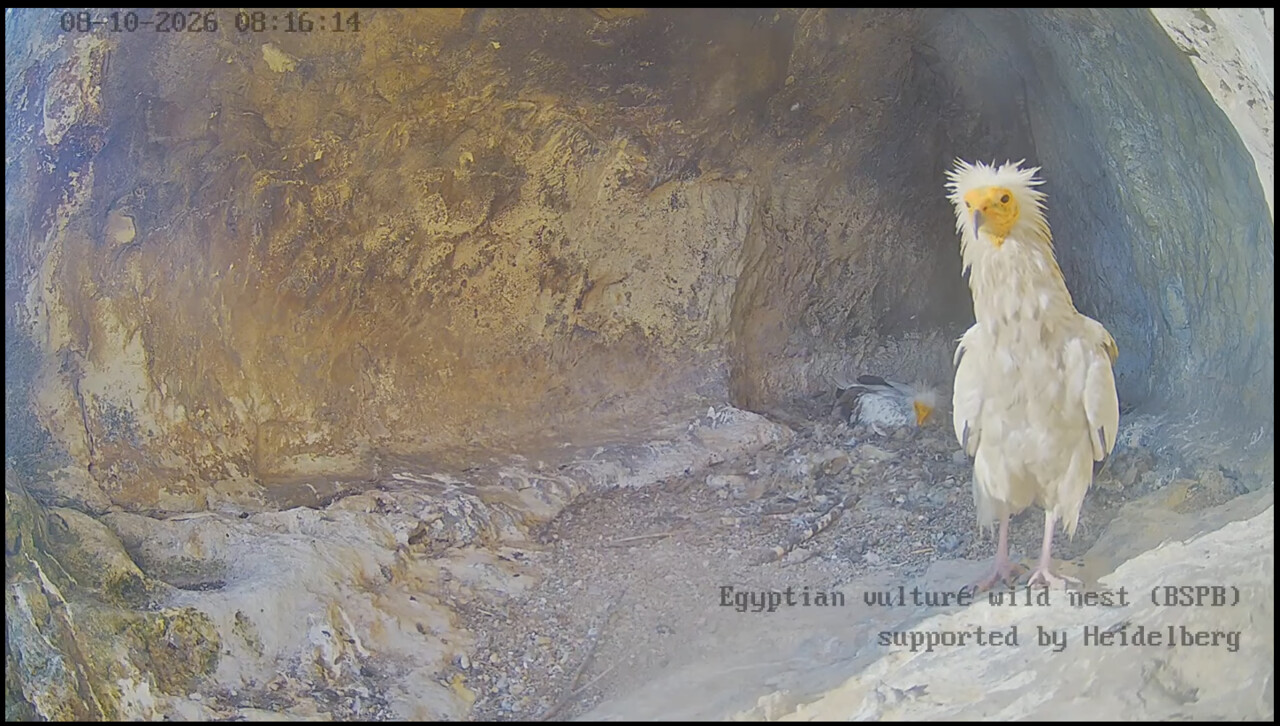
These vultures are really unique. They're found in Europe and Africa, but this is the only live stream of Egyptian vultures I've found.
They have bright yellow faces and long head feathers they sometimes puff up around their heads. They love to strike a pose, too.
They're also known for being one of few birds to demonstrate tool use. They use their beaks to drop rocks onto eggs with thick shells, like ostrich eggs, to break open the shells.
Black vulture in Spain
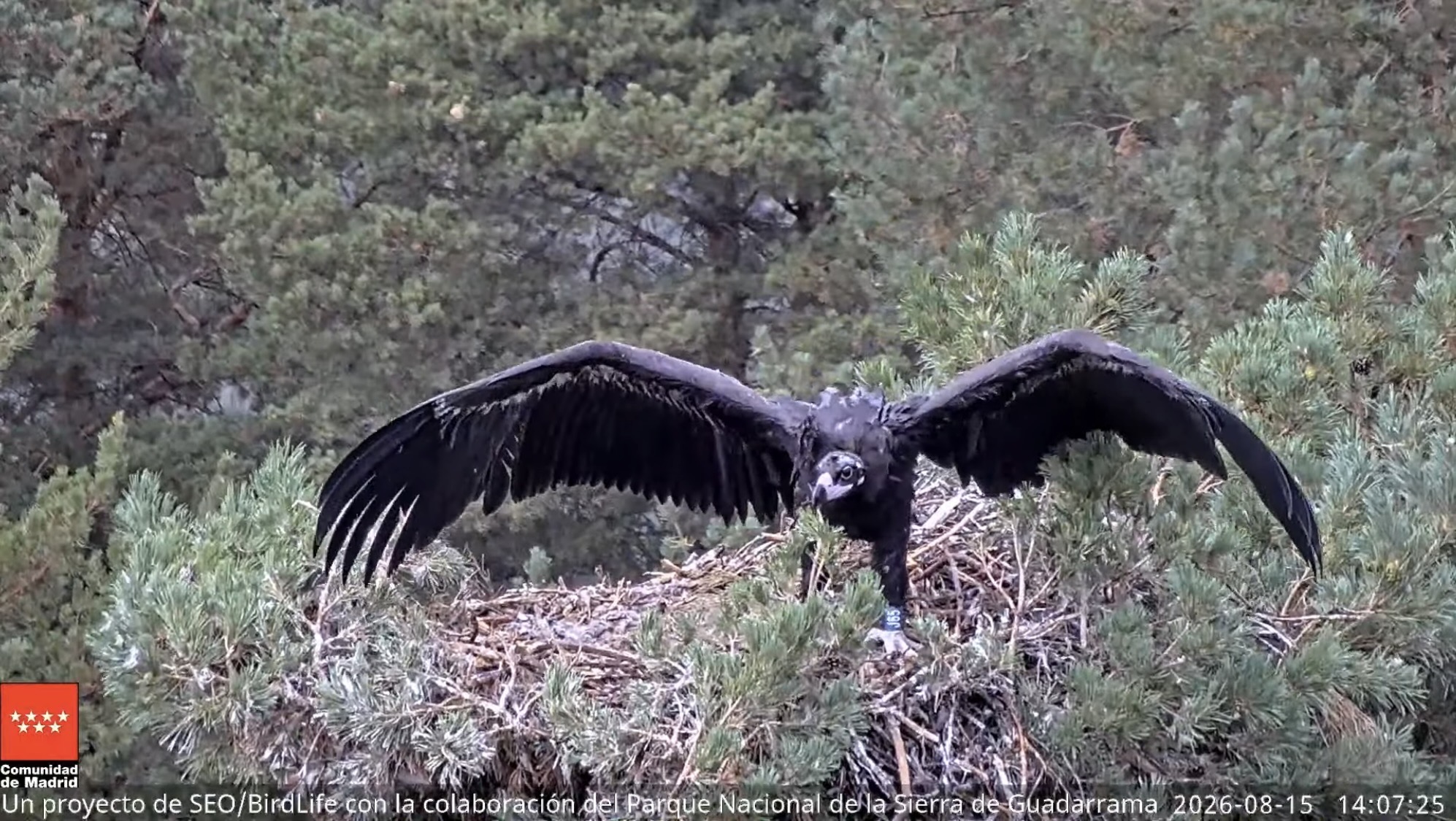
This nest has one chick who's about to fledge any day now. This stream only runs during the day, with highlights shown during the night in Spain. The chick is mostly alone in the nest these days, and spends a lot of time stretching its wings, jumping, and flapping, in preparation for its first flight.
Bearded vultures in Spain
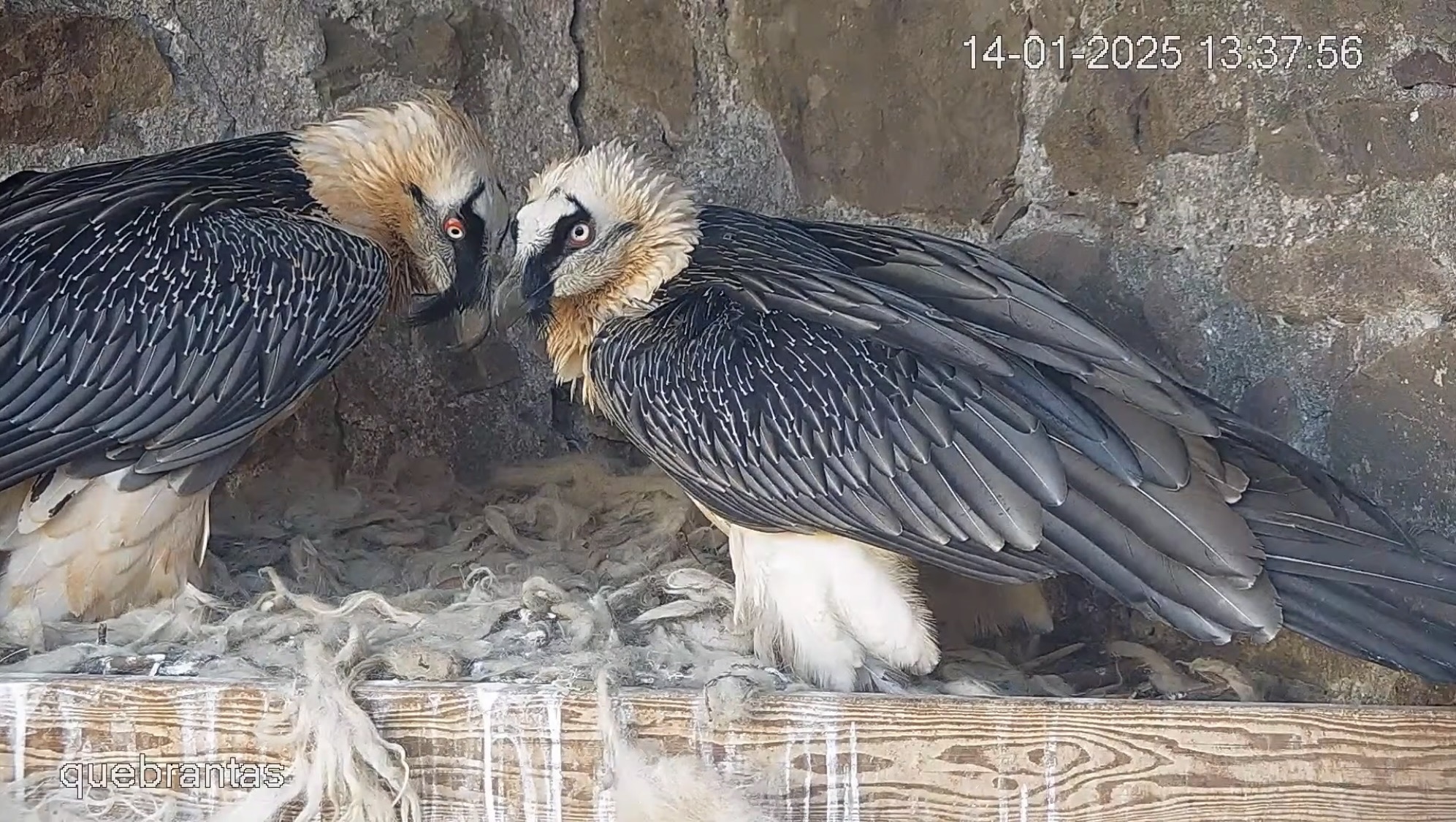
My favourite vulture species is the bearded vulture. They're critically endangered, and this pair can't survive in the wild, but live in a rescue and conservation centre in Spain. They're called Huesos (Bones) and Montañessa (Mountain girl).
Bearded vultures usually have orange head and leg feathers, but those feathers are naturally white. The orange comes from the high iron levels in the water of their habitats.
Their live stream runs for most of the year, and they'll start prepping their nest soon and hopefully lay eggs around the end of the year.
Bearded vultures in South Africa
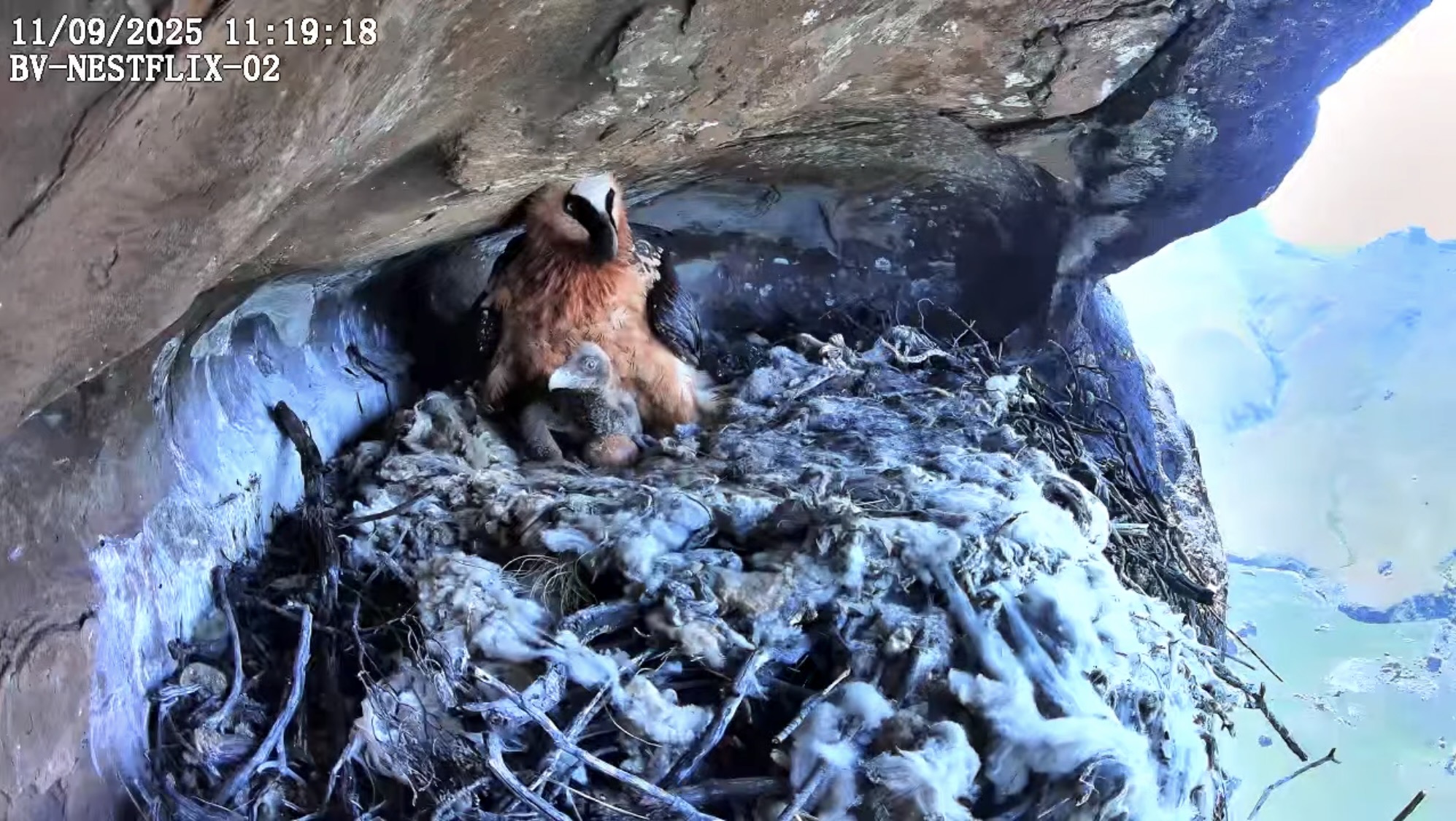
The YouTube channel Nestflix runs a live stream of a pair of bearded vultures that nest on high cliffs in the mountains of South Africa.
This year the pair chose a different nest site, so we won't be able to watch them raise their chick, but hopefully they'll be back next year.